
“`html
Why Switching From Semaglutide to Tirzepatide Without Lab Work First Is a Costly Mistake — What Your Metabolic Profile Actually Determines About Which GLP-1 Works for Your Body
If you’ve been searching semaglutide vs tirzepatide which is better, you’re asking the right question — but the answer isn’t a medication name. It’s a number on a lab report. Thousands of patients across Magnolia, Cypress, The Woodlands, and Houston are making the switch between GLP-1 medications based on social media posts and word of mouth, spending hundreds of dollars more per month, and still not losing the weight they expected. The reason isn’t the drug. It’s that no one looked at the labs first.
This post breaks down what your metabolic profile actually reveals about which GLP-1 medication is likely to work for your body — and why skipping that step is one of the most expensive mistakes you can make in a physician-supervised GLP-1 weight loss program.
Semaglutide and Tirzepatide Are Not the Same Drug
Both are injectable medications used for weight loss, but they work differently at the cellular level.
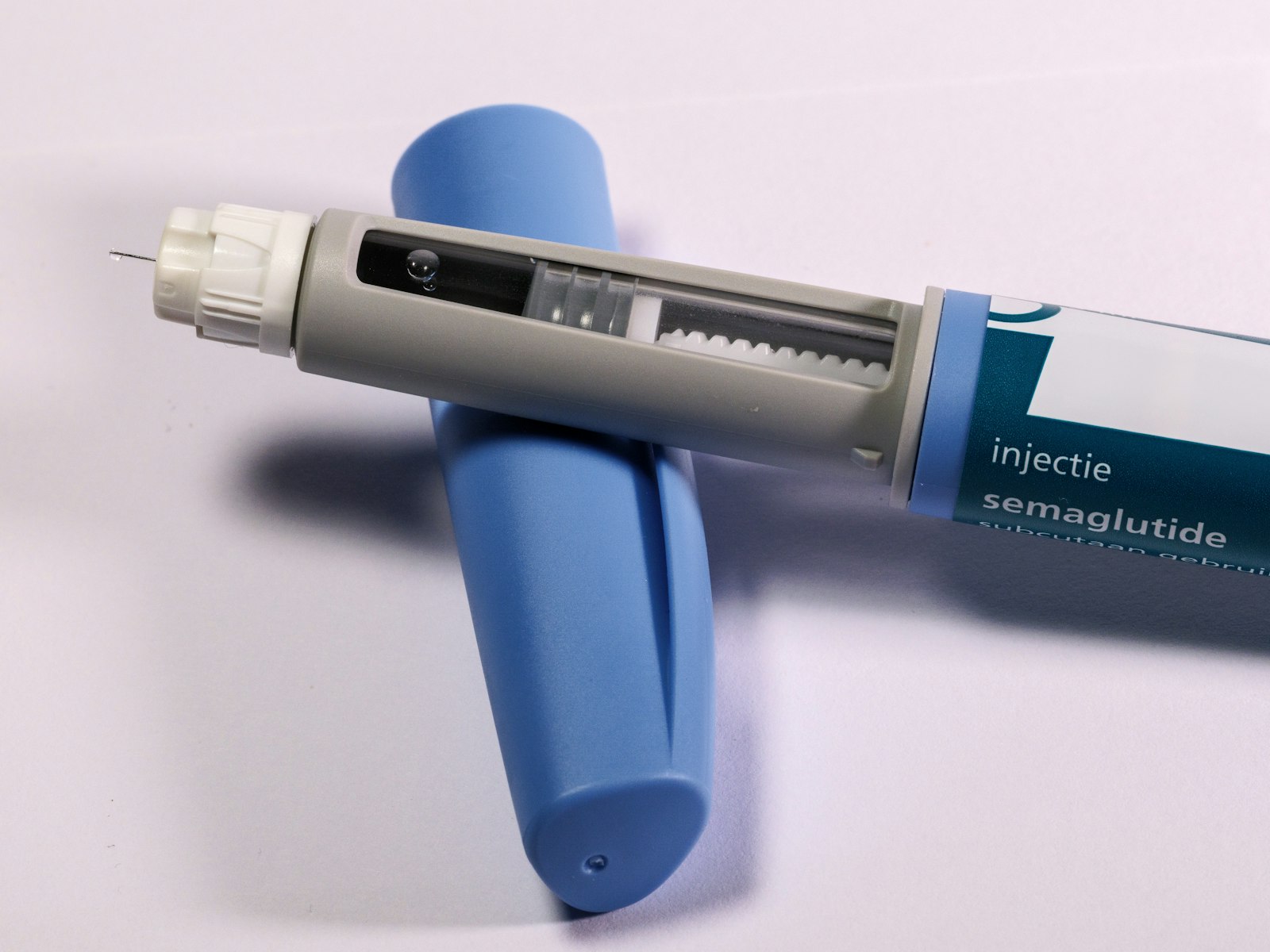
Semaglutide is a GLP-1 receptor agonist. It mimics one hormone — glucagon-like peptide-1 — which slows digestion, reduces appetite, and improves insulin signaling. It’s effective for many people, especially those whose primary driver of weight gain is appetite dysregulation.
Tirzepatide is a dual agonist — it activates both GLP-1 and GIP (glucose-dependent insulinotropic polypeptide) receptors. GIP plays a role in fat storage and energy metabolism that GLP-1 does not. Clinical trials have shown tirzepatide weight loss results averaging 15–22% body weight reduction — often more than semaglutide in head-to-head comparisons. But those are population averages. Your body is not a population average.
The difference in mechanism matters because the question is never “which drug is stronger” — it’s “which drug addresses the specific metabolic dysfunction driving weight gain in your body.” That answer lives in your blood work, not in a Reddit thread.
What Your Labs Actually Reveal
Before recommending a switch — or a start — physicians at our physician-supervised GLP-1 weight loss program look at a targeted panel of markers that paint a complete picture of what your metabolism is actually doing.
Insulin Resistance and Fasting Insulin
Standard bloodwork checks fasting glucose and HbA1c. That’s the floor, not the ceiling. Fasting insulin tells you how hard your pancreas is working to keep glucose in range. Someone with fasting insulin above 15 µIU/mL is insulin resistant even if their glucose looks normal. For these patients, tirzepatide’s GIP component often produces dramatically better results because GIP directly influences insulin secretion and fat tissue metabolism in ways GLP-1 alone does not.
Thyroid Function — Full Panel, Not Just TSH
TSH alone misses subclinical hypothyroidism in a significant percentage of patients. Free T3, free T4, and reverse T3 give the full picture. A patient with elevated reverse T3 — a condition where T3 is converted into an inactive form, often under chronic stress — will stall on any GLP-1 medication until thyroid function is corrected. Switching from semaglutide to tirzepatide in this scenario produces the same result: a plateau. The drug didn’t fail. The thyroid problem wasn’t found.
Cortisol and Adrenal Function
Chronic high cortisol promotes fat storage around the abdomen and drives glucose dysregulation that directly undermines GLP-1 receptor sensitivity. If your cortisol is dysregulated, the appetite-suppressing signal from semaglutide or tirzepatide is competing against a hormonal environment that is actively telling your body to store energy. No dose increase overcomes that without addressing the root cause.
Sex Hormones: Estrogen, Progesterone, Testosterone
For women between 35 and 55, this is often the missing variable. Low progesterone causes water retention and carb cravings. Estrogen dominance promotes fat storage in the hips and abdomen. Low testosterone — which drops in women as much as in men during perimenopause — reduces muscle mass, slows metabolism, and makes GLP-1 medications measurably less effective. Bioidentical hormone replacement therapy alongside GLP-1 treatment often unlocks weight loss that had completely stopped. The medication wasn’t the problem. The hormonal environment was.
Inflammation Markers and Nutrient Status
Elevated high-sensitivity CRP (hs-CRP) signals systemic inflammation that impairs receptor sensitivity across the board. Nutrient deficiencies — particularly Vitamin D, B12, magnesium, and zinc — compound inflammation and directly interfere with metabolic signaling. A patient who is deficient in Vitamin D has measurably impaired insulin sensitivity regardless of which GLP-1 they’re taking.
When Switching From Semaglutide to Tirzepatide Is Actually the Right Call
The switch is clinically appropriate in specific, lab-confirmed scenarios:
- Labs confirm clear insulin resistance, and tirzepatide’s GIP mechanism better targets that dysfunction
- The patient has been on semaglutide for 12+ weeks at therapeutic dose with optimized labs and weight loss has genuinely stalled — not just slowed
- Side effect profile on semaglutide is significantly limiting tolerance at doses required for effect
- Glucose metabolism markers suggest the dual-agonist mechanism is more appropriate for the patient’s baseline
Knowing when to switch from semaglutide to tirzepatide is a clinical decision — not a consumer one. And it requires knowing what the labs say first. Without that baseline, you’re spending significantly more per month on a medication that may produce identical results to what you were already taking — because the underlying metabolic problem is unchanged.
Why GLP-1 Plateau Next Steps Are Always a Lab Question
Most people experience a weight loss plateau at some point on GLP-1 therapy. The common assumption is that the medication has “stopped working” and that a higher dose or a different drug is the solution. That assumption is wrong often enough to matter.
Plateaus happen for predictable reasons — and virtually all of them are visible in a blood panel if you know what to look for. Thyroid conversion issues. Cortisol dysregulation. Declining estrogen or progesterone that shifts fat storage patterns. Nutrient depletion from reduced intake. Rising inflammation from a stressor no one asked about.
When GLP-1 stops working or weight comes back, the answer is often in the blood work. Made Ya Skinny takes a functional medicine approach — running the right labs, reading them correctly, and building a plan around what your body actually needs rather than just increasing the dose. The goal is not to chase a number on a scale with a bigger needle. The goal is to find the reason the body is resisting and remove it.
Medical Weight Loss in Magnolia, TX — What a Real Program Looks Like
If you’re looking for a weight loss clinic near Magnolia TX that doesn’t just hand you a prescription and send you home, the difference is in the clinical approach. Medical weight loss programs Magnolia TX patients trust are the ones that run comprehensive labs, interpret them in context, and adjust treatment based on what the body is actually doing — not what the average patient in a clinical trial did.
At Made Ya Skinny, every patient receives physician-guided oversight from the start. For patients experiencing a plateau or considering a medication change, we run a targeted metabolic panel before making any recommendation. If labs show hormonal imbalance, we incorporate bioidentical hormone therapy as a complement to GLP-1 treatment. If inflammation or thyroid issues are driving the plateau, we address those directly. The medication decision follows the data. Always.
Telehealth consultations are available for patients across Texas and multiple states, so geography is not a barrier to getting this level of care.
The Real Cost of Skipping Labs
Tirzepatide costs significantly more than semaglutide per month in most compounding pharmacy configurations. If you switch without labs and the underlying driver of your plateau is thyroid, cortisol, or nutrient depletion, you will spend 30–50% more per month and produce the same result — a plateau, now on a more expensive drug. The frustration compounds. The cost compounds. And the actual problem goes unresolved for months longer.
Getting labs done before switching costs a fraction of one month’s medication difference. It’s not an obstacle to treatment. It is the treatment. The medication is a tool. The lab work is the blueprint that tells you which tool to use and why.
Ready to Find Out What Your Body Actually Needs?
Stop guessing about whether semaglutide or tirzepatide is the right choice for your body. The answer is already in your biology — it just hasn’t been measured yet. Our physician team will review your full metabolic picture, identify what’s actually driving your weight, and build a plan around what your body needs to move forward.
Book your $17 visit and get the lab-guided clarity that most weight loss programs skip entirely. We serve patients in Magnolia, Cypress, The Woodlands, Conroe, Willis, Montgomery, Tomball, North Houston, and beyond via telehealth.
“`