
Stalled on a GLP-1 · Regaining after stopping · Same question
Have you ever had blood work done, only to be told you’re fine — there’s nothing wrong with you?
And yet the scale stopped. Or the weight came back. “Normal” is not the same as “nothing to find.”
A standard panel checks a short list and grades it pass or fail. It was never built to answer the question you are actually asking: why did semaglutide or tirzepatide stop moving the scale, or why did the weight return once you stopped? Made Ya Skinny looks under the hood for the root cause instead of reaching for a higher dose.
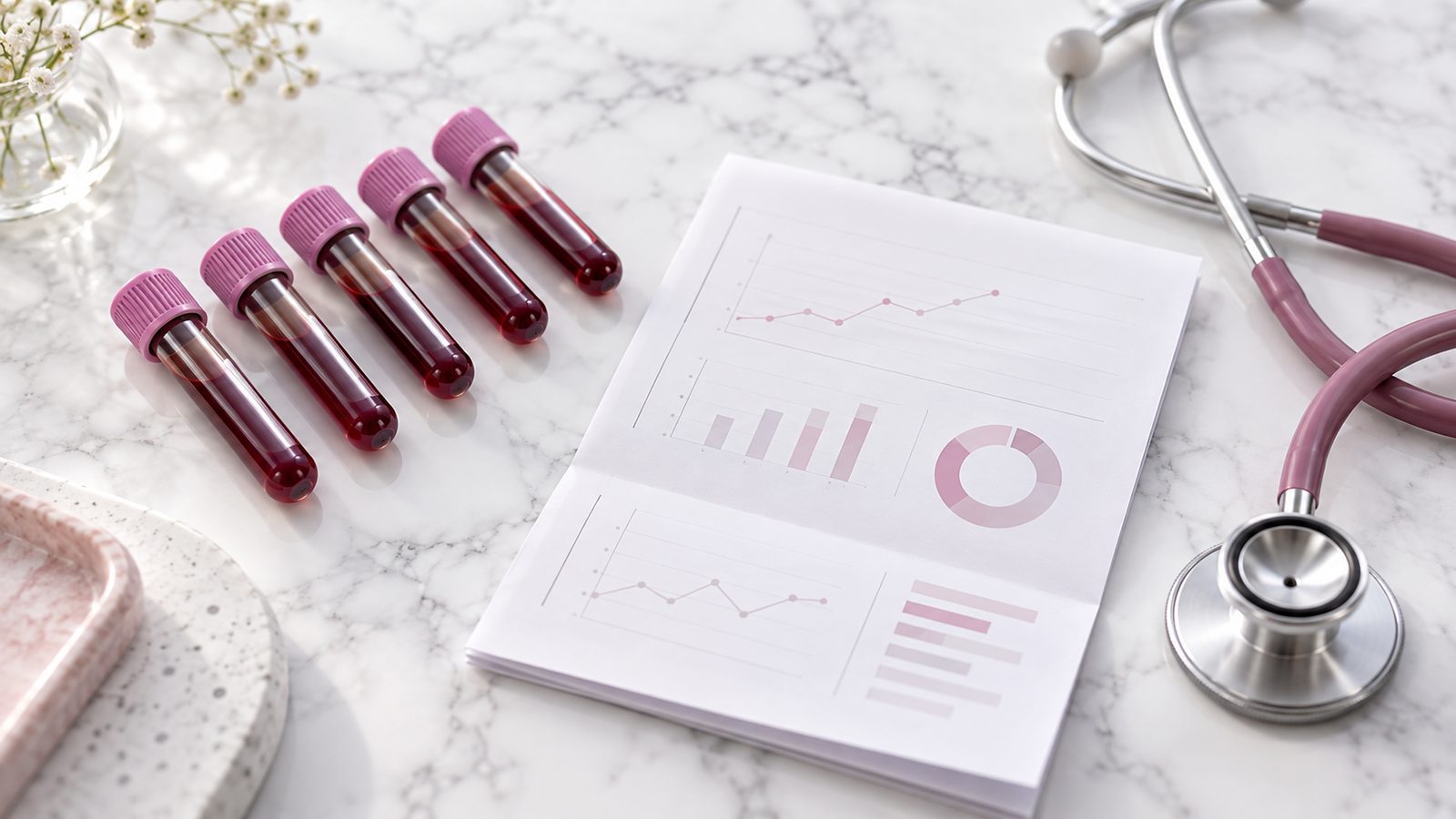
Why the scale stops even when you are doing everything right
Semaglutide and tirzepatide are built to work at low doses. When nothing in the body is fighting them, a low dose is usually enough. When something is, no dose looks like enough. A plateau or a regain is often a symptom of something else going on, not proof that you failed or that the medication did.
Stress hormones
Cortisol
Chronic stress and poor sleep can keep cortisol elevated. Elevated cortisol is associated with abdominal fat storage, stronger hunger signals and reduced insulin sensitivity, all of which can work against a GLP-1. A cortisol pattern is something a standard panel rarely includes. Read more
Silent inflammation
Inflammation
Low-grade inflammation, measured by markers such as high-sensitivity CRP, is associated with insulin resistance and disrupted appetite signaling. It rarely shows up as a symptom you would notice, which is why it is usually found in a lab, not in the mirror. Read more
Nutrient status
Vitamin D
Vitamin D acts more like a hormone than a vitamin, with receptors in fat, muscle and immune cells. Low 25-OH vitamin D is associated with reduced insulin sensitivity and higher inflammation. Many people are low without knowing it. Read more
Metabolic markers
Insulin resistance
Fasting insulin and HOMA-IR show how hard your body is working to manage blood sugar. A GLP-1 improves insulin sensitivity; when resistance is high, it has more to push against. Fasting glucose alone can look normal while fasting insulin does not. Read more
Thyroid
Thyroid function
A full thyroid panel (TSH, free T3, free T4 and antibodies, not TSH alone) shows whether the system that sets your metabolic pace is under-performing. A TSH “in range” does not always mean the rest of the panel agrees.
Sleep and sleep apnea
Sleep
Short or broken sleep shifts the hormones that set hunger. In controlled studies, a few nights of five to six hours lowered leptin, raised ghrelin and increased appetite, and dieters sleeping 5.5 hours lost less fat and more muscle than the same people sleeping 8.5 hours. Untreated sleep apnea is associated with insulin resistance as well. Sleep is not a blood marker, so it is reviewed alongside the labs, and the six-month plan covers daily habits like it.
Hormone shifts
Sex hormones
Estrogen, progesterone and testosterone help decide where fat is stored and how sensitive the body is to insulin — in both men and women. The drop in estrogen through perimenopause and menopause is associated with more abdominal fat and reduced insulin sensitivity. PCOS is associated with insulin resistance and higher androgens. In men, low testosterone is associated with more fat storage, less muscle, and a slower response to a GLP-1, and it becomes more common with age. Any of these can work against a GLP-1 without ever showing up on a standard panel; a hormone panel shows where you actually are, whoever you are.
Other prescriptions
Medications you already take
Some prescriptions are known to promote weight gain or make it harder to lose: corticosteroids, insulin and sulfonylureas, several antipsychotics and antidepressants, and some beta blockers, among others. The Endocrine Society lists them in its obesity guideline for exactly this reason. Nobody should stop or swap one on their own. Bring your full list to the discovery call and to your prescriber; a weight-neutral alternative is a conversation for the clinician who prescribed it.
And more
Up to 80 markers
Hormone, thyroid, metabolic, cardiovascular, inflammation, iron, vitamin, mineral, blood-count, kidney, electrolyte, liver, protein and cellular-health markers, read together instead of one at a time. The exact marker list depends on the current Paath plan.
None of these is a diagnosis. They are the places we look first, and if something is found, it is addressed in the plan.

Raising the dose is not the same as finding the answer
The usual answer when a GLP-1 stops working is a higher dose. It is the easy answer. It sells more medication. It never asks why.
A program that only has a higher dose to offer is not looking for the answer. If the thing working against the medication is never found, one of three things happens, and none of them is what you signed up for.
- You waste money. A higher dose costs more every month while the real blocker keeps doing its job.
- Results slow down. The medication is now working uphill, and the scale shows it.
- You sentence yourself to a life of medication. When the underlying issue is never addressed, the medication becomes the only thing holding the line. That is the opposite of what this program is for.
The goal here is a body that works with the medication at the lowest dose that does the job, and a plan for what comes after it.
What we do instead
Made Ya Skinny partners with Paath. Same panel, same team and same six-month roadmap described on the Paath page, aimed at one question: what is getting in the way?
- Book the free discovery call.Thirty minutes with the Paath team. Enter “Made Ya Skinny” in the details box so Paath can credit the clinic.
- One prepaid LabCorp draw.Up to 80 markers from a single visit to a participating LabCorp location. The exact marker list depends on the current plan.
- A team of experts explains it in plain language.A licensed functional-medicine practitioner reads the full panel and writes a Functional Health Report you can actually understand, not a page of flags.
- A solid path to follow.A personalized six-month plan organizes food, movement, supplement options and daily habits around what the labs found. (Yes, that is the pun. It is intentional.)
- Six months of guidance while you optimize.180 days of practitioner messaging in the Paath app, so the plan adjusts as you go instead of gathering dust.
- Your prescriber stays in the loop.The report is yours to share. Medication decisions stay with the clinician responsible for your prescription; the findings give that decision something to stand on.
Two situations, one answer
Situation one
You hit a plateau on the medication
You are taking it as prescribed, eating carefully, and the scale has not moved in weeks. Before the dose goes up, the panel looks for what may be working against it. Seven things to check before raising a GLP-1 dose.
Situation two
The weight came back after you stopped
Regain after stopping a GLP-1 is common and it is biological, not a character flaw. Hunger signals return, and anything that was quietly working against you before is still there. The panel finds it so the next plan is built around it. What happens to hunger and metabolism when a GLP-1 stops.

Questions people ask before booking
My doctor already ran labs and said everything was normal. Why test again?
A standard panel usually checks 10 to 20 markers against a pass-or-fail range. The Paath panel can include up to 80, read together by a functional-medicine practitioner who is looking for what is working against weight loss, not just what is out of range. “Normal” and “optimal” are not the same line.
Will this get me off my medication?
That is not a promise anyone should make. What the panel does is find what may be making the medication work harder than it should, so your prescriber can make dose decisions with the full picture. The plan that follows is built for life with less medication, not more.
Does Paath change my prescription?
No. Paath is an educational functional-health program. Its labs are physician-ordered and interpreted by a licensed practitioner. Medication decisions stay with the clinician responsible for your prescription.
Do I have to come into the office?
The discovery call is by phone or video, and the blood draw is at a participating LabCorp location near you. Your report and six-month plan are delivered in the Paath app.
Book a free Paath discovery call
What this page is, and is not
This page is education, not a diagnosis. Lab markers described here are things the panel tests for and that may be associated with a slower response to GLP-1 medication; finding one does not mean it is the cause, and addressing one is not a promise of a result. Paath does not replace your existing medical care, diagnose disease or change a GLP-1 or hormone prescription without the clinician responsible for that treatment. Individual results will vary.
Questions first? Use the live chat bubble on this page.
Choose the service you need and reserve an available office visit online. If you have a question first, use the live chat bubble on this page.