
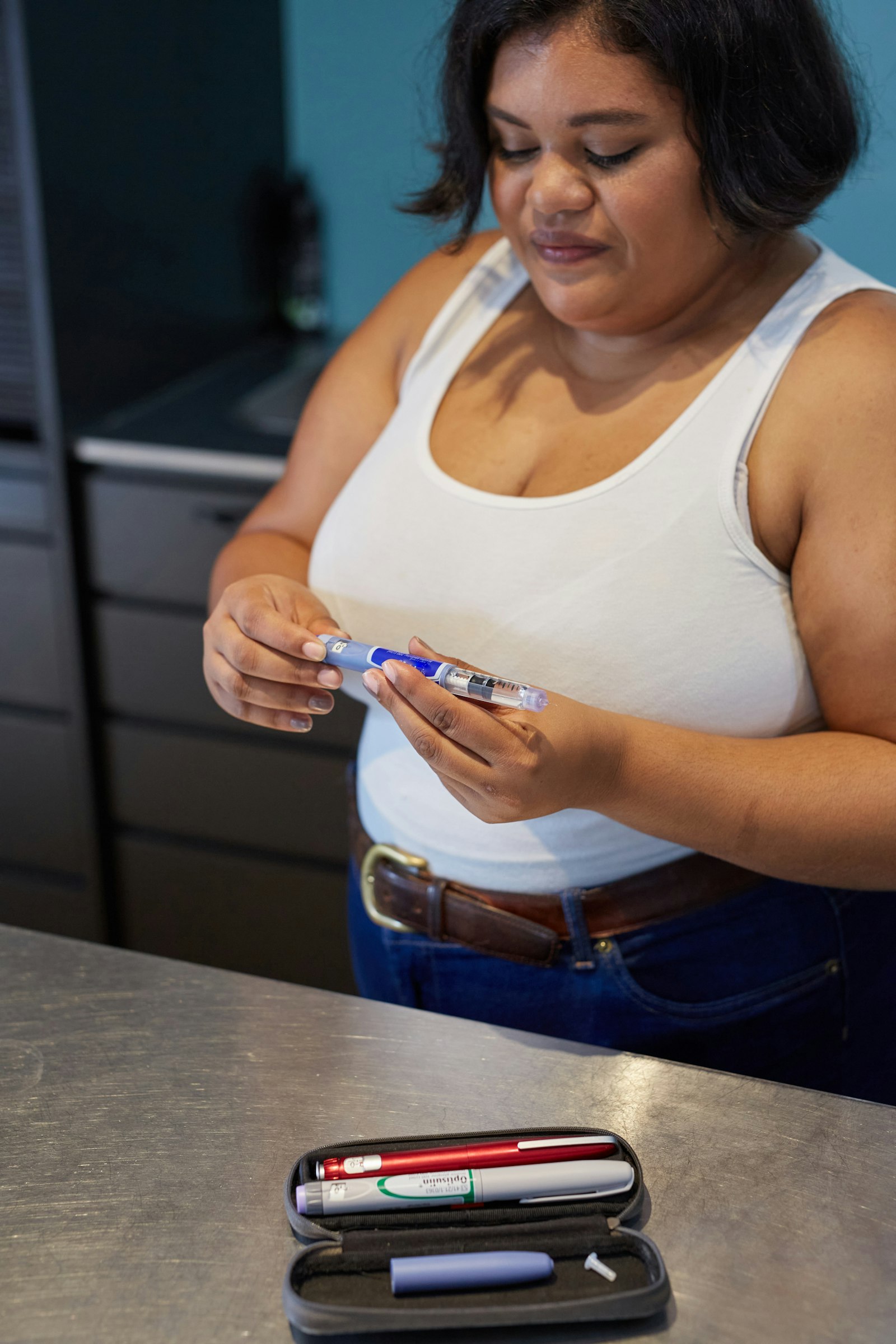
Losing Weight on GLP-1 but Losing Muscle Too? What Semaglutide and Tirzepatide Actually Do to Body Composition — and the Muscle Preservation Protocol Most Weight Loss Clinics Never Check
If you’re losing weight on semaglutide or tirzepatide and your clothes are finally fitting differently — that’s real progress. But if you feel weaker than expected, more fatigued, or like the scale keeps moving while your body still looks soft, you may be experiencing muscle loss on semaglutide or tirzepatide — one of the most common and underaddressed consequences of rapid GLP-1-assisted weight loss. Understanding what is actually happening to your body composition is the difference between losing fat and losing function.
What GLP-1 Medications Actually Do to Your Body Composition
GLP-1 receptor agonists like semaglutide and tirzepatide reduce appetite, slow gastric emptying, and promote significant calorie restriction. That’s exactly what makes them so effective for weight management. But when calorie intake drops dramatically, the body does not only burn fat — it also breaks down muscle tissue for energy, especially when protein intake and resistance activity are not actively maintained.
Clinical trials on semaglutide and tirzepatide report impressive average weight loss — roughly 15% of body weight for semaglutide and 20–22% for tirzepatide. But the research also shows that a meaningful portion of that weight loss — in some studies, 25 to 40% — can come from lean mass rather than fat. That matters. Losing lean mass slows your metabolism, reduces strength, increases injury risk, and makes weight regain more likely when the medication is stopped, paused, or reduced.
This is not a reason to avoid GLP-1 medications. They remain among the most effective physician-supervised tools available for weight management. But it is a clear reason to make sure your program is tracking the right things — not just the number on the scale. If you are already enrolled in a physician-supervised GLP-1 weight loss program, ask your provider whether body composition monitoring is part of your plan. If the answer is no, keep reading.
Why Most Weight Loss Clinics Never Catch This
Most programs measure one thing: your weight. A standard scale tells you nothing about GLP-1 body composition — how much of that weight is fat, muscle, or water. A patient can lose 30 pounds and look thinner while actually carrying a higher percentage of body fat than when they started, simply because lean mass came off faster than fat mass.
At a properly supervised program, body composition evaluation is not an add-on. It is built into how your progress is tracked. Knowing your lean mass trend changes the clinical protocol — from how your dose is managed to what nutritional and movement support is layered alongside the medication.
Warning Signs Your GLP-1 Program May Be Missing the Muscle Picture
- You are losing weight but feel weaker or more fatigued than expected
- Your strength is declining even though the scale continues to move
- You have hit a plateau and no one has reviewed your labs or lean mass
- Your body looks softer rather than leaner as you lose weight
- You lost significant weight but regained quickly after a dose hold or pause
Any of these patterns is worth raising with your provider. They are not signs that GLP-1 has stopped working — they are signals that your program needs to look deeper.
What a Muscle Preservation Protocol Actually Looks Like
Protecting lean mass during GLP-1 therapy is not complicated, but it requires intention. The most important elements are consistent and evidence-backed.
Protein Intake — Actively Managed, Not Assumed
When calorie intake is reduced on GLP-1 therapy, protein becomes even more critical. Most adults in an active weight loss phase need to target protein deliberately at every meal — not just “eat healthy.” Many patients on semaglutide eat very small amounts and unknowingly under-consume protein for weeks at a time, accelerating lean mass loss without realizing it. Your provider should be asking about this specifically, not assuming it is covered by general nutrition guidance.
Resistance Training — Even Light Forms Count
The most evidence-backed tool for preserving muscle during weight loss is resistance exercise. Walking is valuable and should continue. But it is not the same as loading your muscles. Even bodyweight movements, resistance bands, or light weight training two to three times per week signal your body to protect muscle rather than break it down for energy. If pain or mobility limitations are blocking this, that conversation belongs in your medical visit — not something to push through alone.
Lab Monitoring That Goes Beyond Weight
Hormone levels, thyroid function, and key nutrient markers all affect how your body partitions weight loss between fat and muscle. Low testosterone — which affects women as well as men — directly accelerates muscle breakdown during calorie restriction. Thyroid imbalances alter your body’s ability to maintain lean tissue. Deficiencies in B12, magnesium, and iron reduce the energy and hormonal signaling needed to favor fat loss over muscle loss. Without checking these, a provider is managing your weight without actually understanding your metabolism.
Tirzepatide Body Composition: Is It Different from Semaglutide?
Tirzepatide, a dual GIP and GLP-1 receptor agonist, produces greater average weight loss than semaglutide in head-to-head clinical research. Some early data also suggests tirzepatide may have a modestly more favorable tirzepatide body composition profile — with a somewhat higher proportion of fat loss relative to lean mass compared to semaglutide at equivalent weight loss percentages. However, the risk of lean mass loss is still real and clinically meaningful at the dose levels used for significant weight reduction, and the protective strategies — adequate protein, resistance activity, and lab monitoring — apply equally to both medications.
For a conversation about which medication fits your specific situation, a physician consultation is the appropriate starting point. Individual factors including your starting weight, medical history, activity level, hormones, and labs all shape which direction makes clinical sense for you.
When GLP-1 Stops Working: The Answer Is Often in the Blood Work
If you have been on a GLP-1 medication and your weight loss has stalled — or if you stopped and regained weight quickly — the reason is not always “the medication stopped working.” Frequently, it is a metabolic issue the medication cannot fix on its own. Low thyroid function can slow fat metabolism regardless of how effectively GLP-1 suppresses appetite. Cortisol imbalances from chronic stress drive fat storage in ways that override the drug’s effect. Nutrient deficiencies reduce the energy and hormonal signals needed to lose fat instead of muscle. Hormonal changes during perimenopause and menopause alter body composition in ways that semaglutide alone does not fully address.
When GLP-1 stops working or weight comes back, the answer is often in the blood work. Made Ya Skinny takes a functional medicine approach — running the right labs, reading them correctly, and building a plan around what your body actually needs rather than just increasing the dose. A GLP-1 body composition check that includes comprehensive lab work is not a luxury at this level of treatment. It is the standard your program should already be meeting.
Whether you are just starting on GLP-1 therapy or you have been on it for a year and something has shifted, the team at Made Ya Skinny — serving Magnolia, Cypress, The Woodlands, Conroe, Willis, Montgomery, and North Houston, with telehealth available across multiple states — is built to track and protect your full body composition, not just the number on the scale. Explore what a complete body composition evaluation looks like as part of a supervised program at the Made Ya Skinny physician-supervised GLP-1 weight loss program.
Take the Next Step — Know What Your Program Is Actually Doing to Your Body
Don’t wait until you’ve lost muscle you have to spend months rebuilding. A physician-supervised program that tracks body composition and runs the right labs from the start gives you a clearer picture and a stronger long-term outcome. Book your $17 visit with the Made Ya Skinny team in Magnolia, TX today — and find out what a real body composition review and functional medicine approach looks like in practice.
Individual results vary. This content is for educational purposes and does not constitute medical advice. Consult your provider before starting, stopping, or changing any medication or treatment plan.