
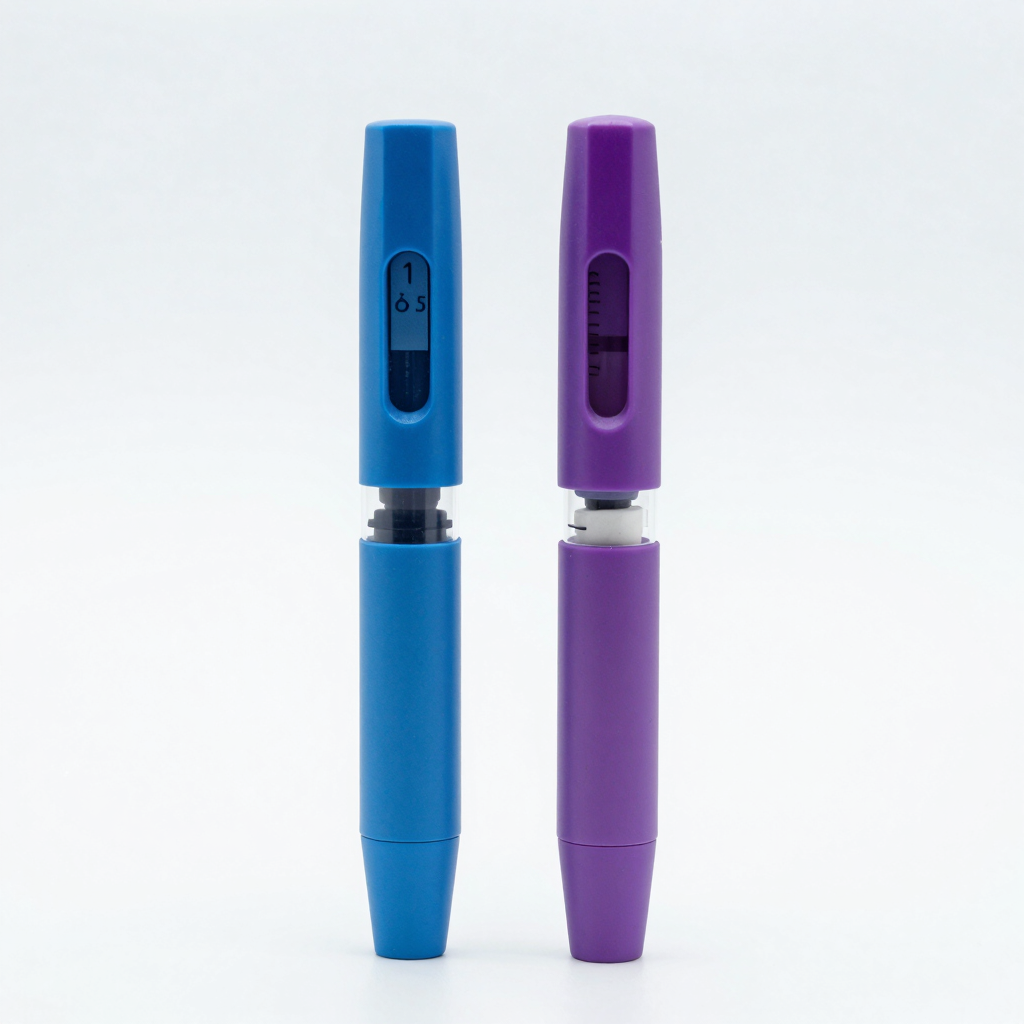
What “Physician-Supervised” Weight Loss Actually Means — and the Questions That Expose a GLP-1 Prescription Mill
If you have typed medical weight loss clinic near me into a search bar lately, you already know the results are overwhelming. Telehealth platforms, subscription services, local clinics, online pharmacies — all of them use phrases like “physician-supervised” or “doctor-prescribed.” But those two words can mean very different things depending on the provider. They can describe a real clinical relationship, or they can describe a short online questionnaire that ends with a prescription in the mail. Knowing the difference matters — for your safety, for your results, and for what happens when something unexpected occurs along the way.
A Prescription Is Not a Program
There is a meaningful distinction between receiving a GLP-1 medication and being enrolled in a physician supervised weight loss program. One is a transaction. The other is a clinical partnership.
Semaglutide and tirzepatide are powerful medications. They affect gastric emptying, appetite signaling, insulin response, and — over time — body composition. Used inside a real program, they produce meaningful, lasting weight loss. Used without clinical oversight, they can mask underlying conditions, deplete lean muscle mass, interact with other medications, or produce side effects that go unmanaged for months because no one is watching.
Physician supervision means a physician reviews your health history, orders and interprets your labs, monitors your clinical response, and adjusts your care based on how your body is actually responding — not just approving a dose based on a number on a scale.
What a Legitimate GLP-1 Program Actually Includes
When you are evaluating what is included in a GLP-1 program — whether at a weight loss clinic in Magnolia TX or anywhere else — ask what the program actually provides before you commit. A legitimate physician-supervised program should include the following:
- Baseline lab work before prescribing. A physician who prescribes without knowing your thyroid function, fasting glucose, liver markers, kidney function, and lipid panel is working without the most important clinical information. Lab work is not optional. It is the foundation of safe prescribing.
- A thorough medical history review. Certain conditions, medications, and personal history factors change how GLP-1 therapy should be approached — and in some cases, whether it is appropriate at all. A thorough intake is not a formality; it is patient safety.
- Structured follow-up with clinical oversight. Your weight, symptoms, blood pressure, and side effect profile should be reviewed at regular intervals — not only when you reach out to report a problem.
- A clinical strategy for plateaus and dose changes. Plateaus happen. A real program has a strategy for addressing them based on your labs and your clinical history — not a reflexive push to a higher dose without understanding why progress slowed.
- Direct access to a real provider when something feels wrong. Side effects, unexpected changes, and questions arise throughout treatment. You should have a clear, fast path to an actual clinician.
At Made Ya Skinny, every patient in our physician-supervised GLP-1 weight loss program goes through a structured clinical intake before the first dose is prescribed — including labs, a complete medical history review, and a direct conversation with a provider. We do not prescribe until we know what we are working with.
The Questions That Expose a GLP-1 Prescription Mill
Not every telehealth platform or online service claiming to offer physician supervised weight loss is running the same kind of operation. Some are clinicians doing careful, individualized work. Others are operating at volume — processing approvals quickly with minimal physician involvement. These questions will tell you which type you are dealing with before you spend money or start a medication.
What labs do you run before prescribing?
If the answer is “none” or “we don’t require labs,” that is a significant clinical red flag. Lab work reveals conditions that can change whether GLP-1 therapy is appropriate, what dose is safe to start with, and what to monitor throughout treatment. Prescribing without it is not physician-supervised care — it is a prescription on request.
Who reviews my results, and how often?
Ask specifically whether a physician reviews your labs and your ongoing data — or whether the clinical decisions are handled by non-physician staff or automated systems. In a legitimate program, a licensed physician is directly involved in clinical judgment, not just listed on a website for compliance purposes.
What happens if I plateau or start regaining?
A prescription mill’s answer to a plateau is usually a higher dose. A physician-supervised program’s answer is a clinical investigation. Ask the clinic what their process is when a patient stops responding — because that answer reveals whether they are treating you or just filling orders.
Can I actually speak with the prescribing physician?
Some platforms list a physician’s name prominently in marketing materials but route all patient communication through non-clinical staff. Ask directly: can you speak with the prescribing physician if you have a concern? The answer to that question tells you a great deal about the level of care you are actually buying.
How do I know if a clinic’s claims are realistic?
No honest clinic can promise a specific number of pounds lost, a fixed timeline, or the same result for every patient. If a program sounds too certain — if it presents a specific outcome as though it applies uniformly to all patients — treat that as a warning sign. Individual results vary because individual bodies vary. A trustworthy provider will say that plainly rather than letting you assume otherwise.
Semaglutide Online vs. a Supervised Clinic: What You Are Actually Comparing
The appeal of a purely online approach to semaglutide is speed. But what the comparison between online-only platforms and a supervised clinic actually measures is the degree of clinical involvement in your treatment. Speed and oversight are not the same thing, and the difference becomes important the moment something does not go as expected.
When weight loss programs run at volume without adequate physician involvement, patients often end up with a prescription and no plan — and no one to call when things get complicated. The medication is only one part of the equation. The clinical judgment around it is what makes treatment both safe and sustainable over time.
When GLP-1 Stops Working, the Answer Is in the Blood Work
GLP-1 medications are effective for many patients, but results are not uniform — and for some patients, progress slows or reverses over time. When that happens, the instinct is often to push for a higher dose. But the more important question is: why did results slow down in the first place?
When GLP-1 stops working or weight comes back, the answer is often in the blood work. Made Ya Skinny takes a functional medicine approach — running the right labs, reading them correctly, and building a plan around what your body actually needs rather than just increasing the dose. Thyroid function, cortisol patterns, insulin resistance markers, and nutrient deficiencies can each stall progress or accelerate regain. Identifying and addressing the underlying picture changes what is possible for that individual patient.
This is why lab work is not a one-time intake step in our program. It is an ongoing clinical tool that guides every phase of your care — including the phases where the scale stops moving.
What Physician-Supervised Care Looks Like at Made Ya Skinny
Made Ya Skinny serves patients in Magnolia, Cypress, The Woodlands, Conroe, Willis, Montgomery, Tomball, and North Houston — and via telehealth across multiple states. Our program is built around real clinical oversight: labs before prescribing, physician review of your results, structured follow-up visits, and a care plan that evolves as your body responds.
We may prescribe FDA-approved medications such as Wegovy or Zepbound where clinically appropriate. When a patient’s clinical picture calls for a formulation that standard commercial products do not offer — for example, a specific dose that approved pens do not come in — the prescribing physician makes that determination individually, based on that patient’s needs and what the labs show.
Our program also includes bioidentical hormone replacement therapy for patients whose hormone status is contributing to weight resistance, and functional medicine blood lab optimization for patients who have plateaued or regained after initial progress. These are not upsells. They are clinical tools deployed when the labs show they are relevant to a specific patient.
If you are ready to find out what is actually standing between you and sustainable weight loss, the first step is a real conversation with a real provider. Book your $17 visit and start with the lab work and clinical oversight that a physician-supervised program requires from day one. Individual results vary; what does not vary is the commitment to understanding your body before prescribing to it.